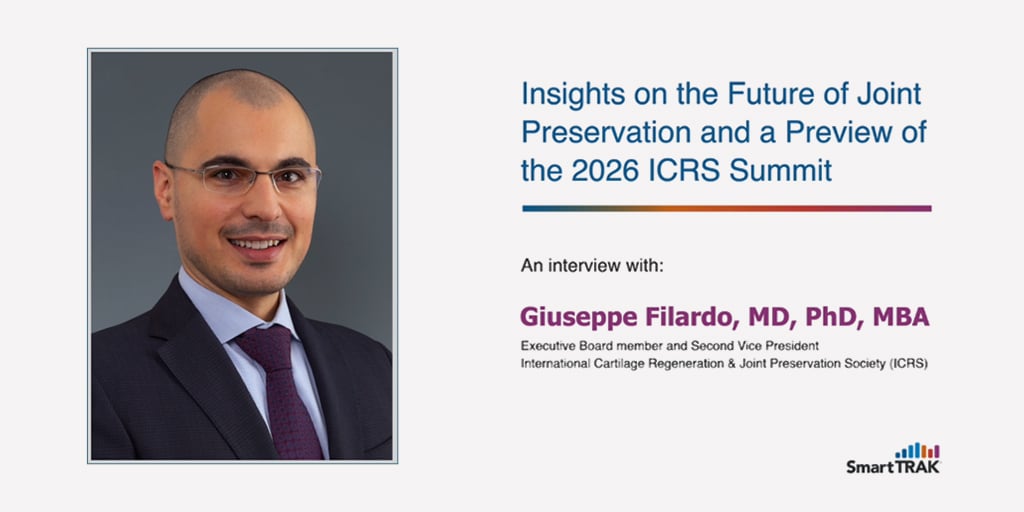
Prof. Giuseppe Filardo previews the 2026 ICRS summit's focus on joint preservation. He cautions against ...
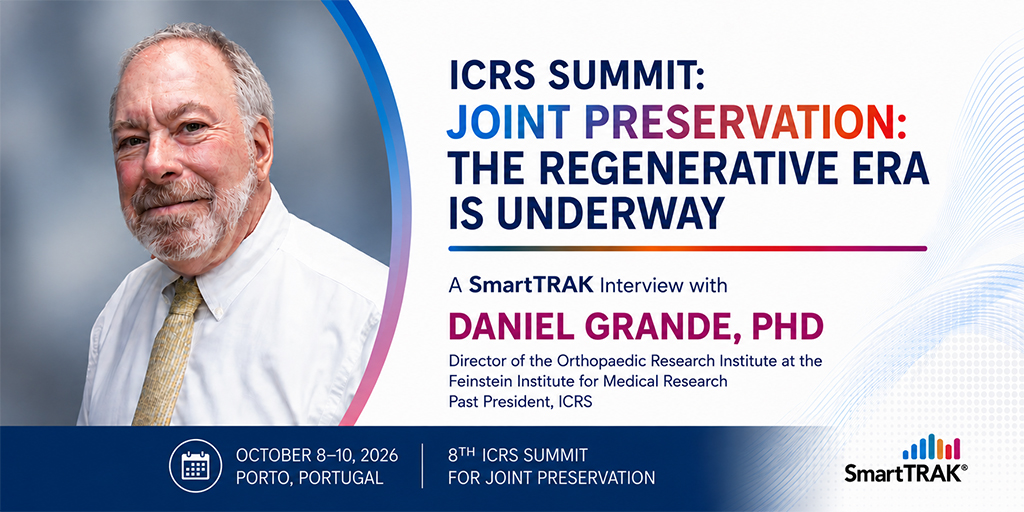
Ahead of the ICRS Summit in Porto, SmartTRAK interviews Past President Dr. Daniel Grande on key joint re...
.png)
Dr. Brian Cole previews the case-based ICRS Chicago Focus Meeting on knee joint preservation. This inter...
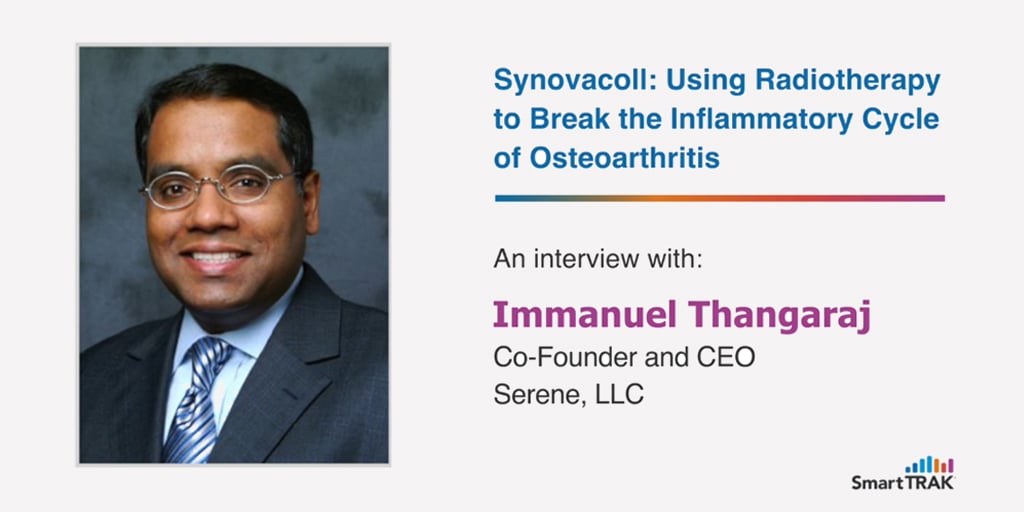
At OARSI 2026, Serene's CEO discussed Tin-117m microparticles, a radiotherapeutic targeting joint inflam...
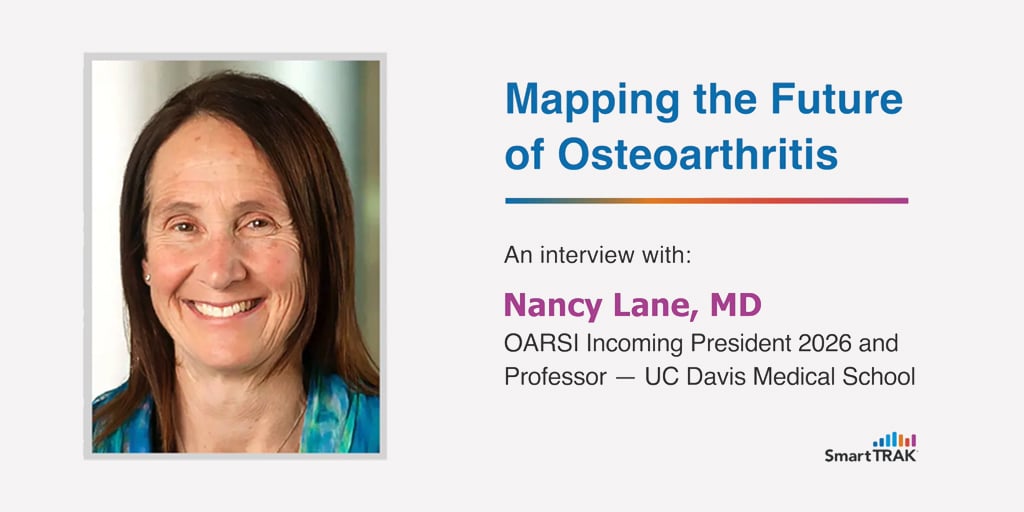
Incoming OARSI President Nancy Lane, MD, discusses the evolving landscape of osteoarthritis treatment, t...

SmartTRAK interviewed Alafair’s leadership to discuss how their proprietary alginate technology is disru...

Pacira BioSciences’ CEO Frank Lee discusses advances in orthopedic pain management, real-world evidence ...
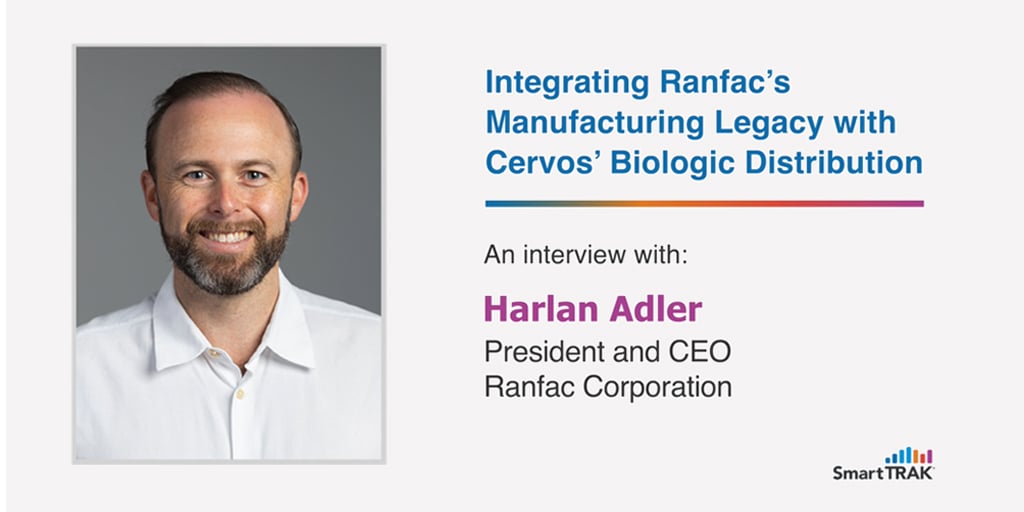
Ranfac CEO Harlan Adler discusses the company's strategic pivot from contract manufacturing to owning cl...

The 2026 cartilage replacement market is moving away from "one-size-fits-all" solutions toward a diversi...

This SmartTRAK interview features a panel of experts discussing the clinical shift in hip preservation t...

 Login
Login